Making NFT minting simple enough for anyone
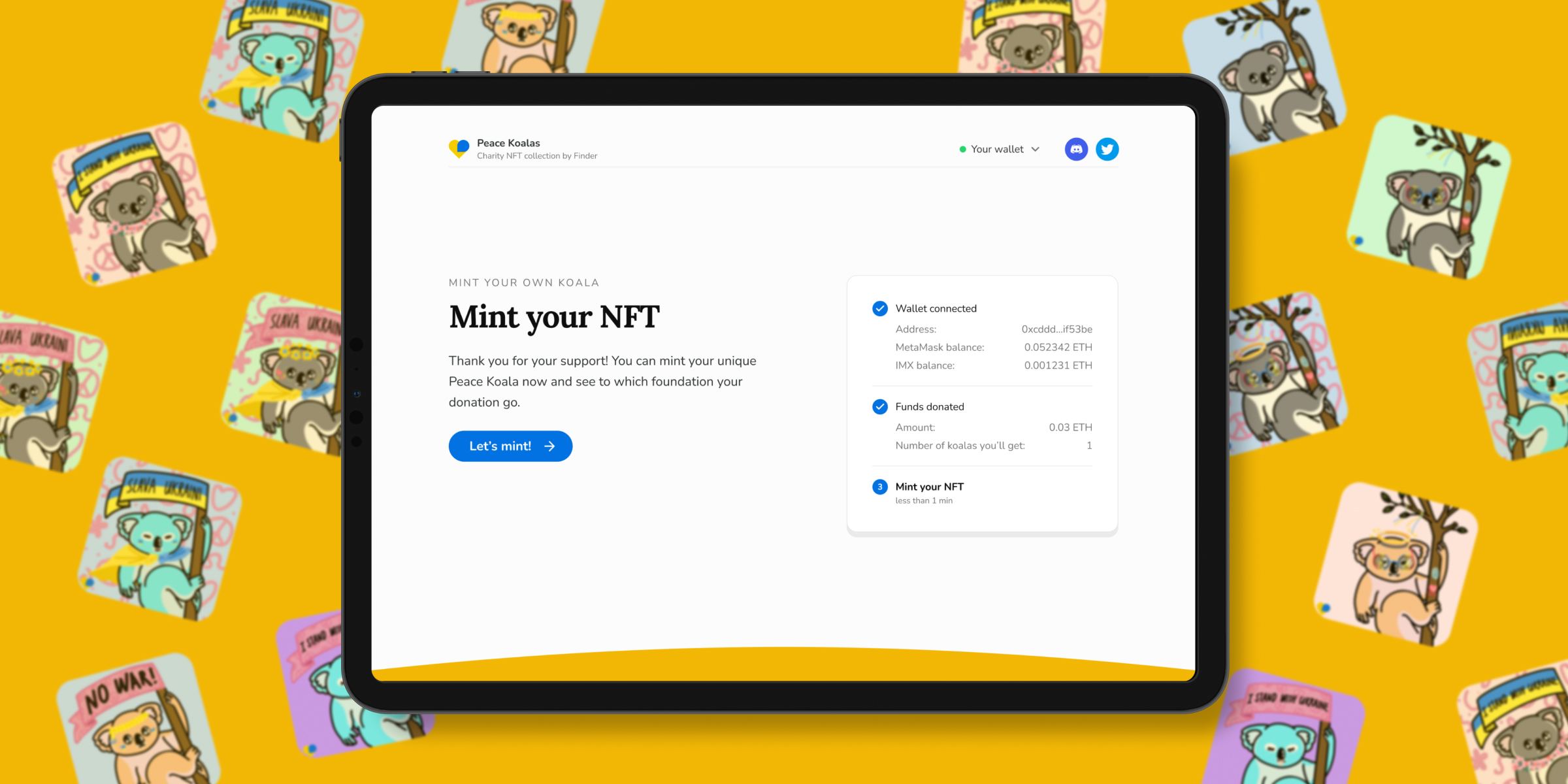
An NFT anyone could mint — even people who'd never touched crypto
In February 2022, Russia's full-scale invasion of Ukraine triggered an urgent desire across Finder to contribute. A cross-functional team self-organised around one idea: create and sell a collection of NFTs, with all proceeds going to Ukrainian aid organisations.
The concept was simple — the execution was not. In 2022, NFTs were surrounded by hype but plagued by poor usability: confusing wallets, technical minting, and low trust. If the collection was only accessible to crypto-native users, it would fail to raise meaningful funds. The challenge was clear — make it possible for anyone, including people who'd never touched crypto, to mint an NFT and contribute.
Project Goals
-
Maximise donations
Remove as many barriers as possible so the widest audience could participate — including people who'd never touched a crypto wallet. Every friction point was a lost donation.
-
Build trust in a low-trust space
NFTs carried baggage — speculation, scams, volatility. The experience needed to feel transparent and legitimate from the first touchpoint.
-
Ship in one month
A volunteer effort run alongside regular work. The scope had to be ruthlessly tight.
Why interested people still hadn't minted
With only a month end-to-end, research had to be fast and focused. I needed to understand two things: why people who were interested in NFTs hadn't bought one yet, and what the minting experience actually felt like from a user's perspective.
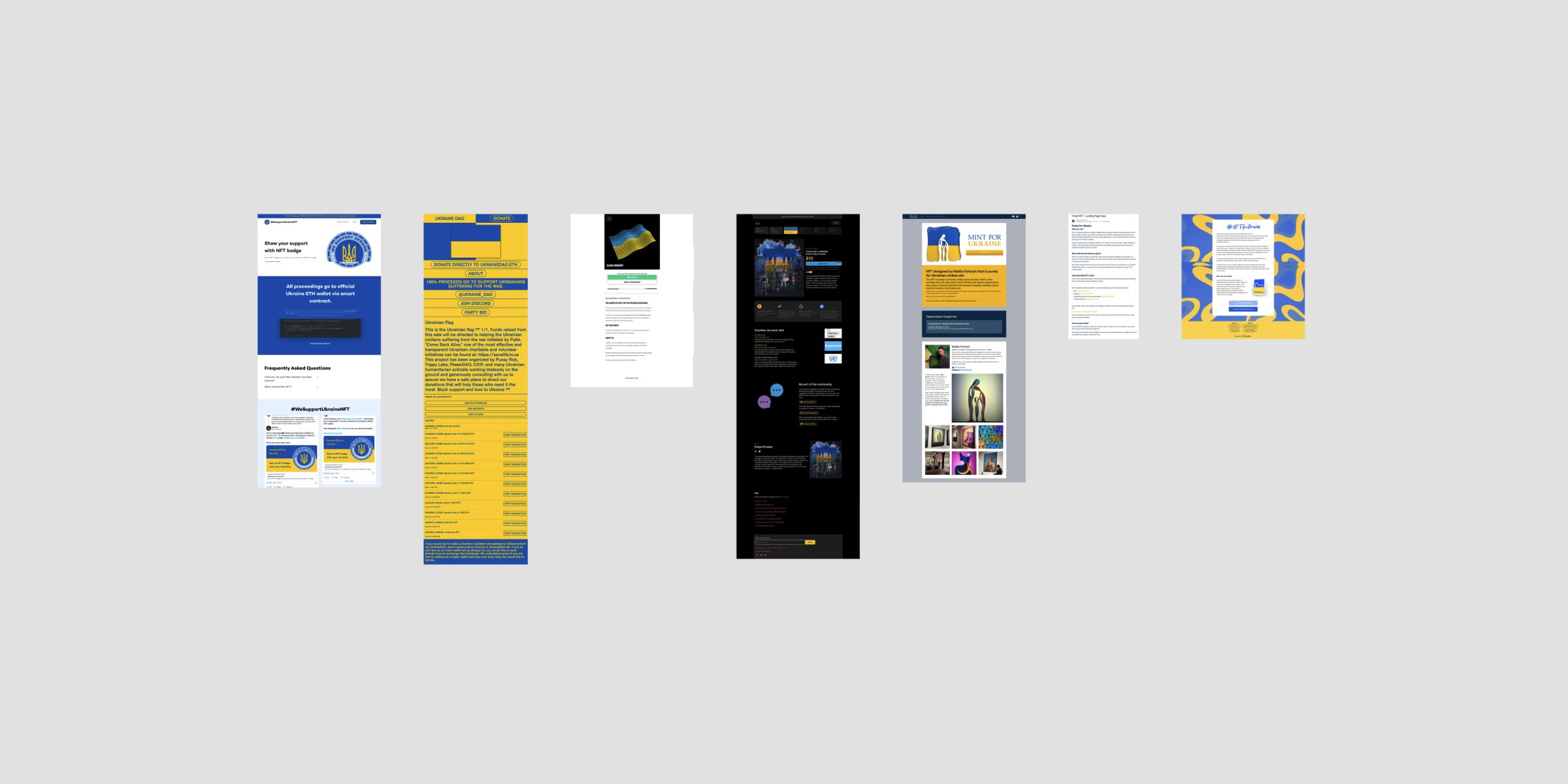
I interviewed 5 people — a mix of crypto-curious individuals and first-time buyers — to understand their mental models, hesitations, and where they'd previously dropped off. I also audited the minting flows of several existing NFT projects to map the end-to-end experience and find the highest-friction steps.
Key Insights
-
The barrier was the whole ecosystem
The problem wasn't any single step — it was the blockchain ecosystem as a whole. People couldn't build a working mental model of how it all fit together, and were deterred by the sheer accumulation of complexity: setting up a wallet, navigating networks, decoding jargon, and keeping up with an industry that changes by the week.
-
Trust was fragile and easily broken
People associated NFTs with scams and speculation. Any hint of pressure, unclear pricing, or missing information about where the money went would kill credibility.
-
Competitors assumed crypto literacy
Most NFT projects were jargon-heavy, skipped basic explanations, and had no error states. The bar for beginner-friendliness was on the floor.
-
Newcomers didn't hold the crypto a mint required
Getting some meant opening a crypto-exchange account and waiting hours, sometimes days, for identity verification. For someone who wanted to donate in the moment, that delay was a dealbreaker — so we had to let people contribute without holding crypto first.
Designing for two audiences, not one average user
The biggest blocker was that newcomers usually didn't even hold the crypto a mint required — enough to bury the whole idea. Then our engineers found Immutable-X, a then-very-new layer-2 protocol that let people mint with a credit card, without owning any crypto first. That removed the single biggest barrier and effectively enabled the entire solution.
With that unlocked, we could design for two distinct segments rather than one average user — broadening the audience and the donations. We built two experiences: one for adept minters who already had a wallet and wanted speed, and one for newbies who'd never minted and needed teaching. Alongside the product work, the creative concept came together: koalas — an instantly recognisable Australian icon (Finder is an Australian company) — reframed as a symbol of peace and solidarity with Ukraine.
Product Requirements
-
Two paths, one goal
A fast, classic path for adept minters who already knew what they were doing — and a more educational path for newbies that broke wallet setup and minting into small, clearly explained steps.
-
Trust from the first screen
The landing page had to immediately communicate where the money goes, who's behind it (Finder), and what the buyer gets — before asking anything of the user.
-
Keep scope ruthless
One month, volunteer time. No community features, no secondary marketplace, no gamification. Mint, pay, done.
With the approach framed and requirements agreed, we moved into prototyping and testing.
The hardest steps lived outside our control
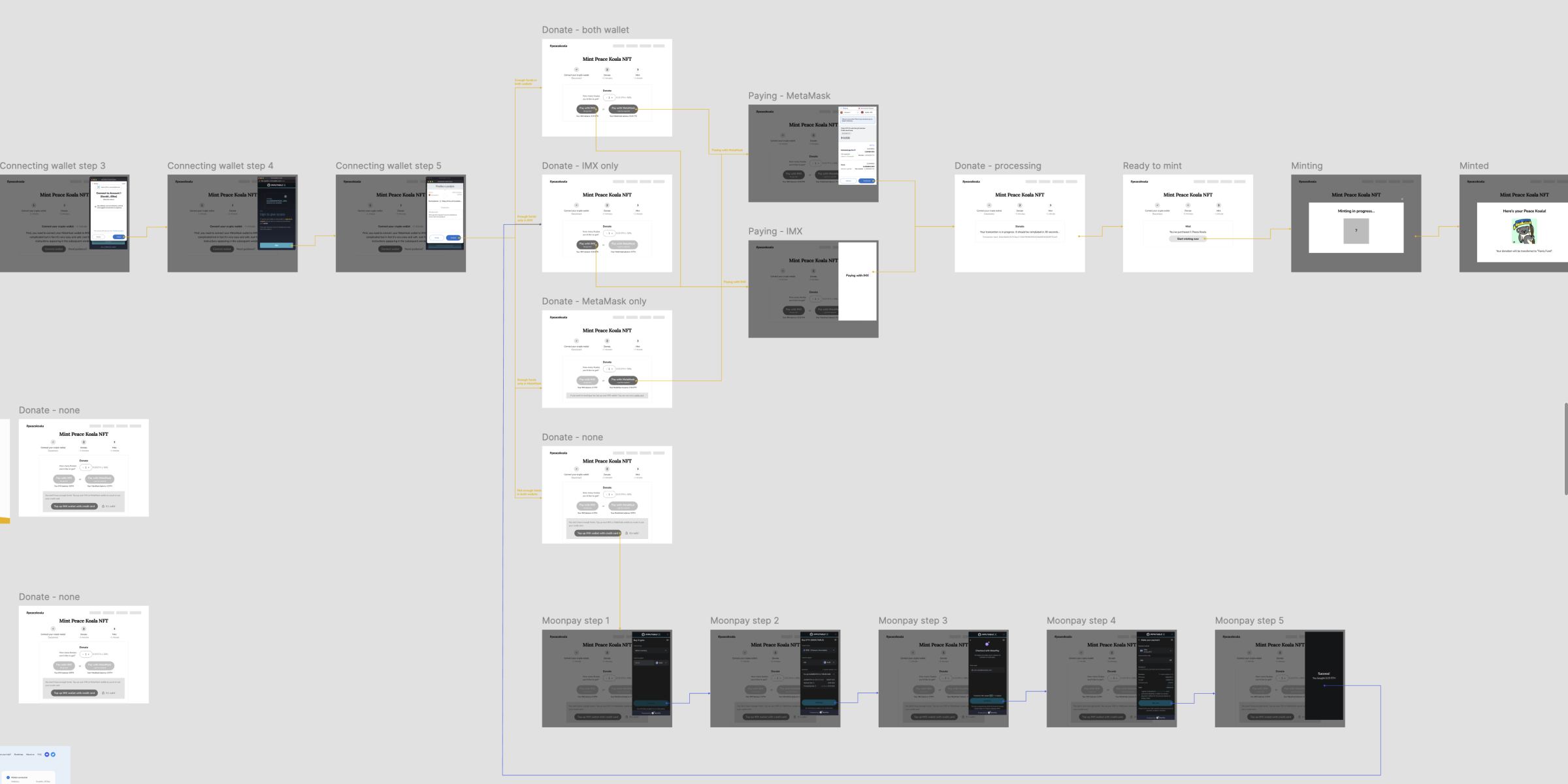
We worked fast and lean — building an interactive prototype and usability-testing it with 6 people so we could catch problems before going live. Several challenges shaped the final product.
Challenges
-
Wallet setup was a third-party black box
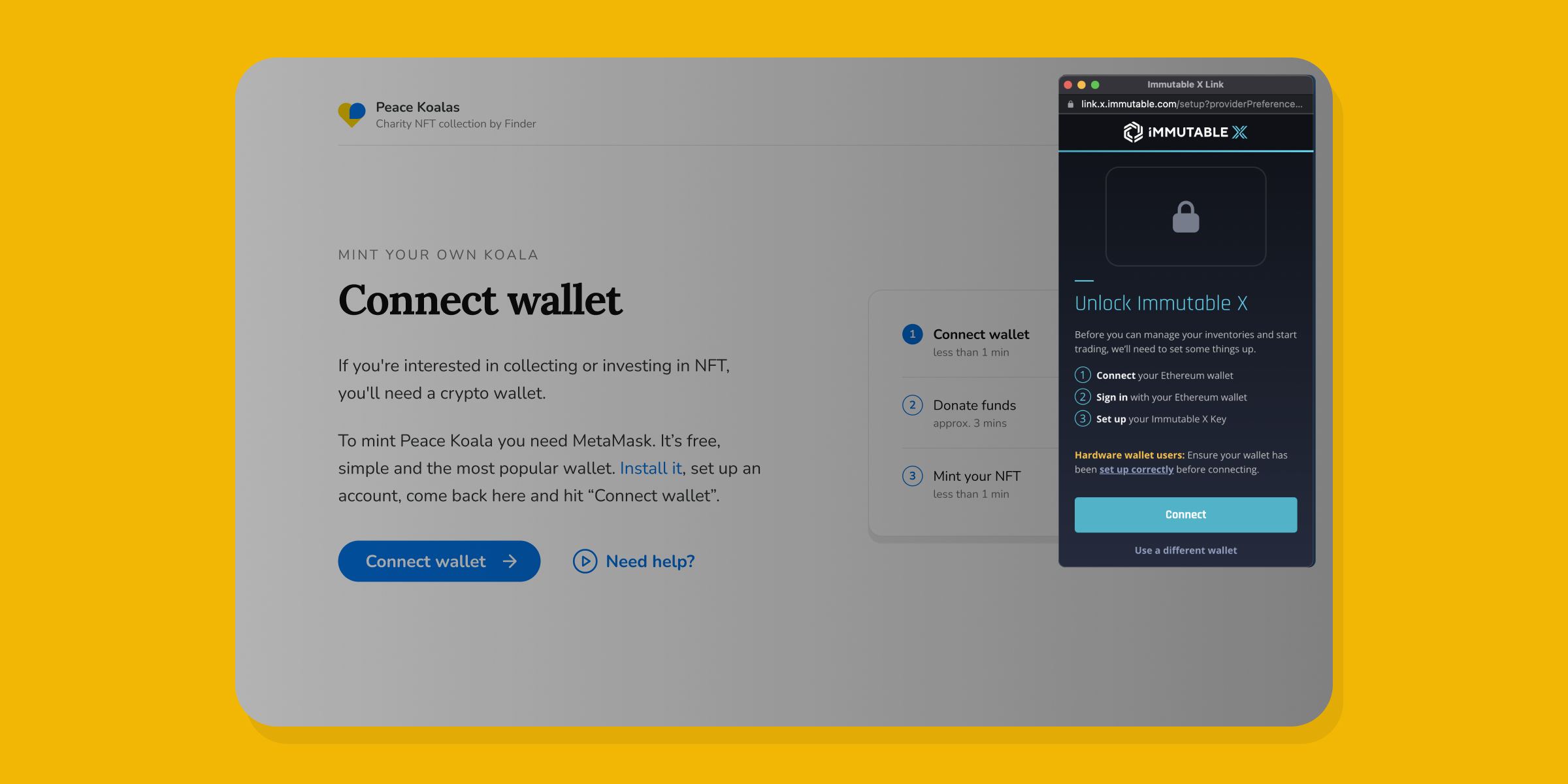
The hardest step — creating a crypto wallet — was entirely outside our control; we couldn't redesign MetaMask. Our only lever was what surrounded it: contextual guidance, a video walkthrough, and copy that prepared users for what they'd encounter before they left our flow.
-
Credit-card minting had technical limits
Immutable-X let users skip crypto entirely, but came with constraints like higher fees and being tied to a single layer-2 network. We had to be upfront about the tradeoffs without overwhelming beginners with details they didn't need.
-
Overcoming NFT stigma
In testing, several people voiced scepticism about NFTs before they'd even seen the product. The charity angle helped, but we still had to lead — across the landing page and all marketing — with the cause and the transparency of where the money went.
-
Scope pressure with volunteer time
Every feature competed with people's actual jobs, so decisions had to be fast and final. We cut a planned Discord community phase and focused entirely on the minting experience and landing page.
An experience anyone could complete
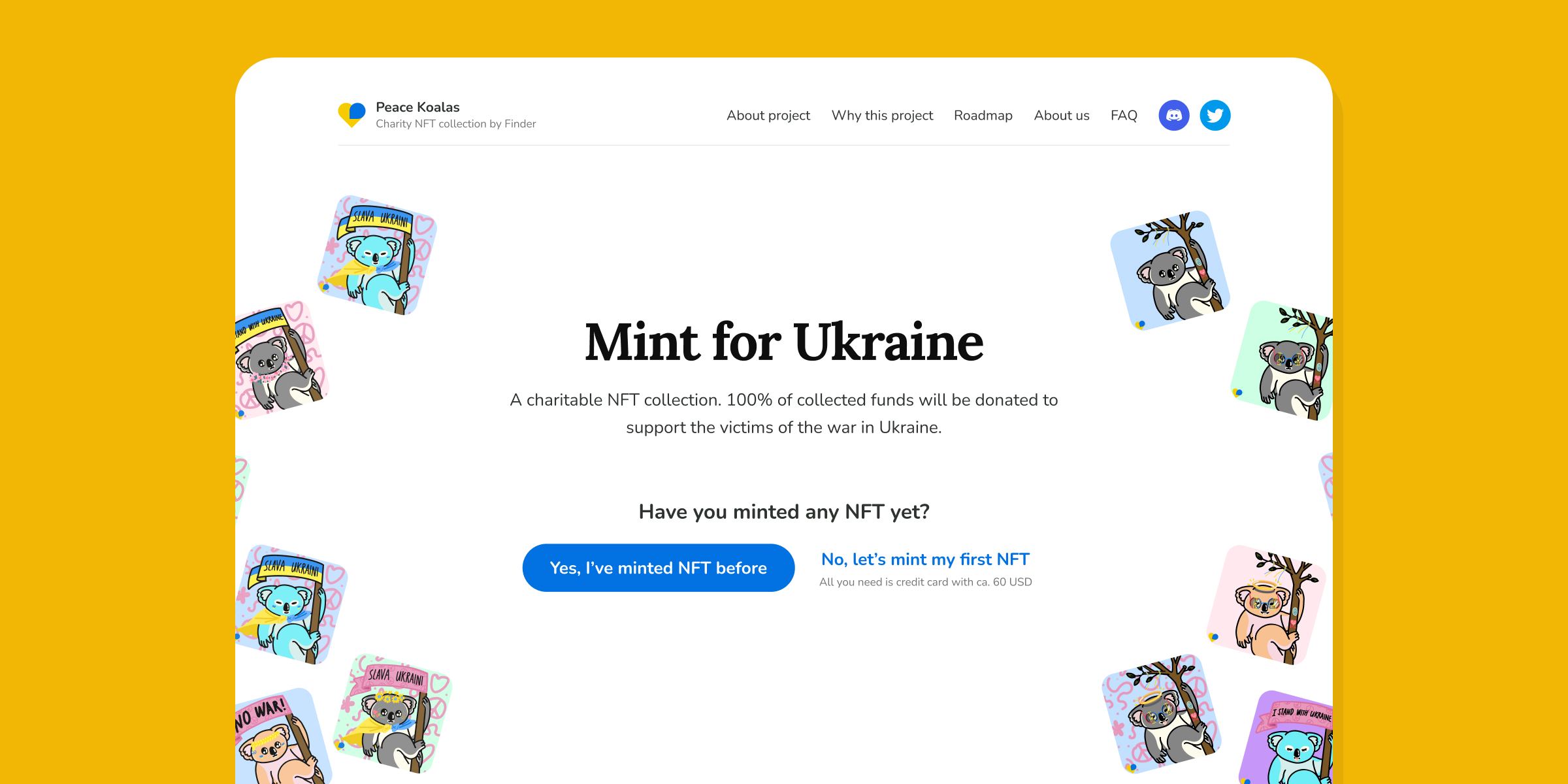
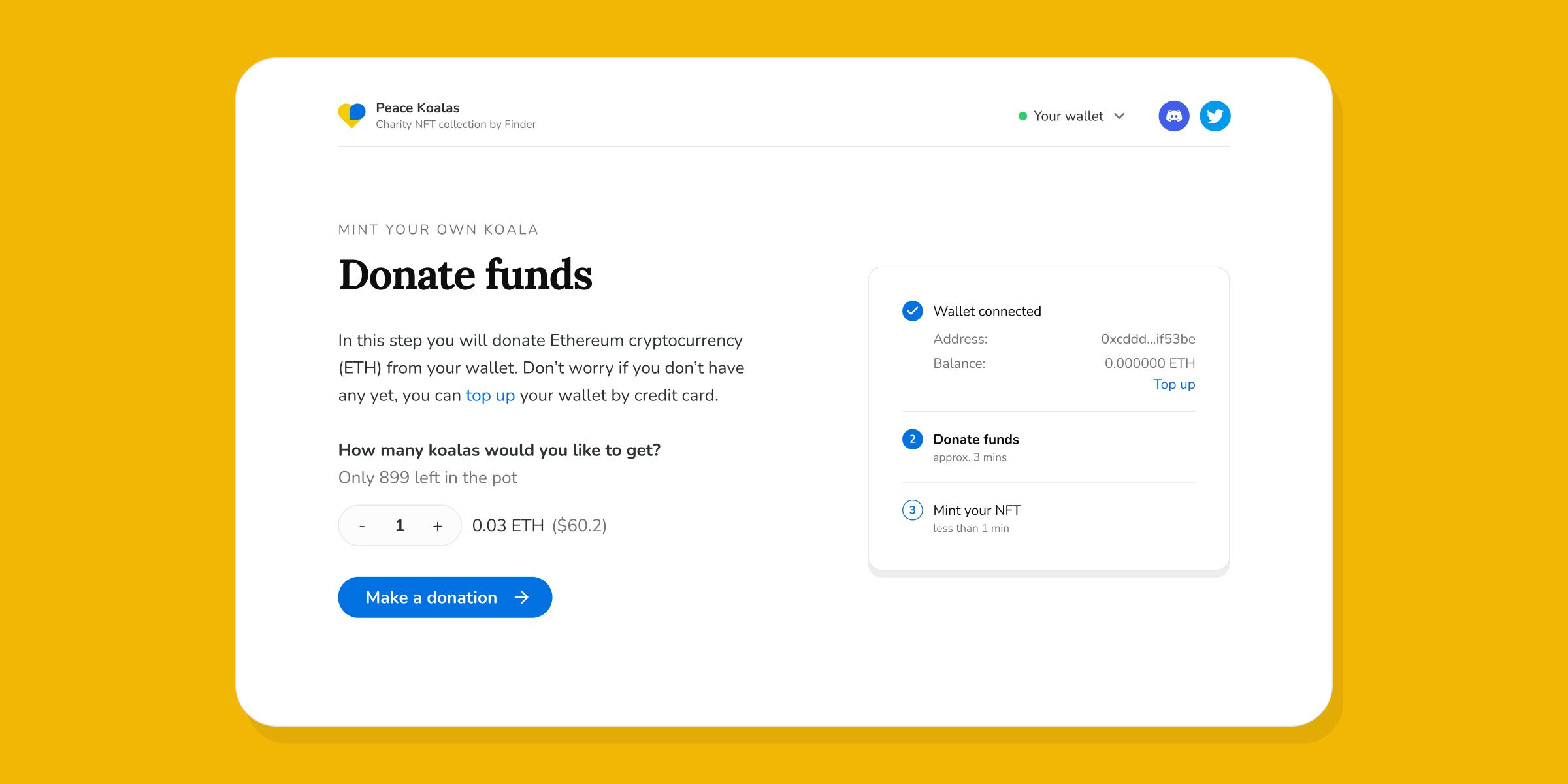
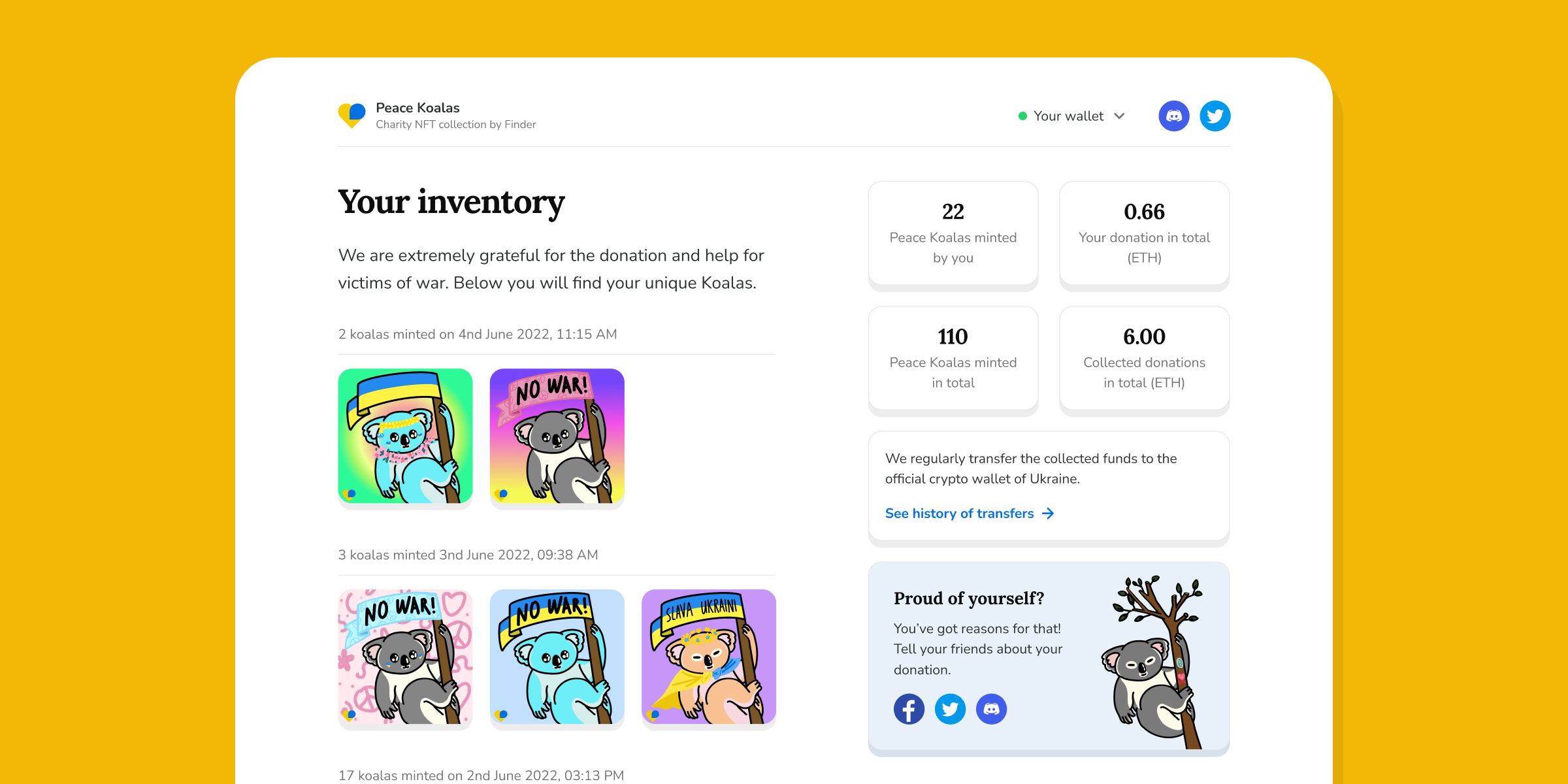
An NFT minting experience designed to let anyone donate to Ukrainian aid, whether or not they'd ever touched crypto. The flow opened with one question — "Have you minted an NFT yet?" — and two buttons. Each answer led to a different path, and the experience diverged from there.
-
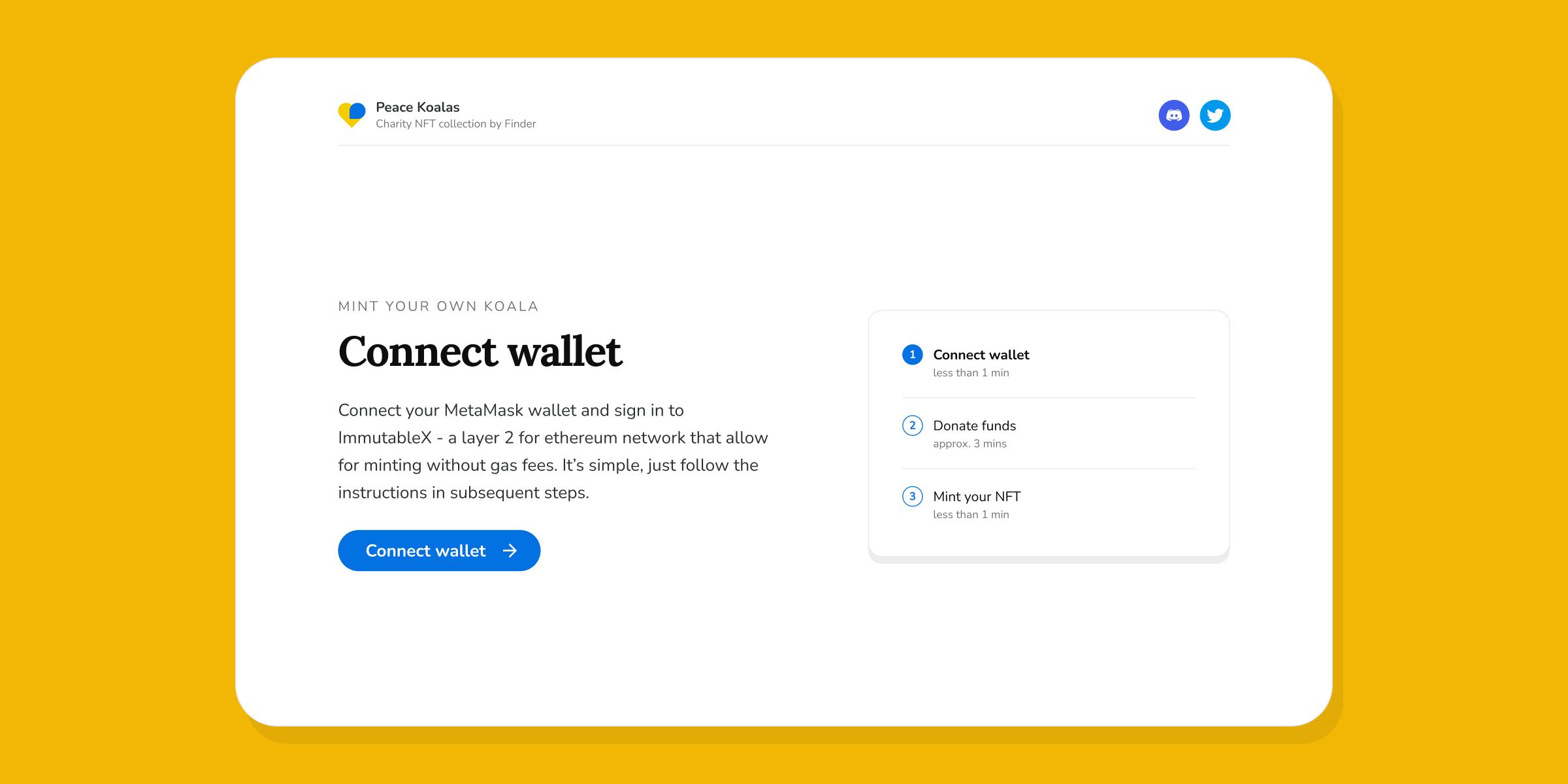
The adept path
Adepts got something close to a typical mint — it spoke the technical language NFT investors already know and stripped out the hand-holding, so they could connect, choose a quantity, and mint without being slowed down.
-
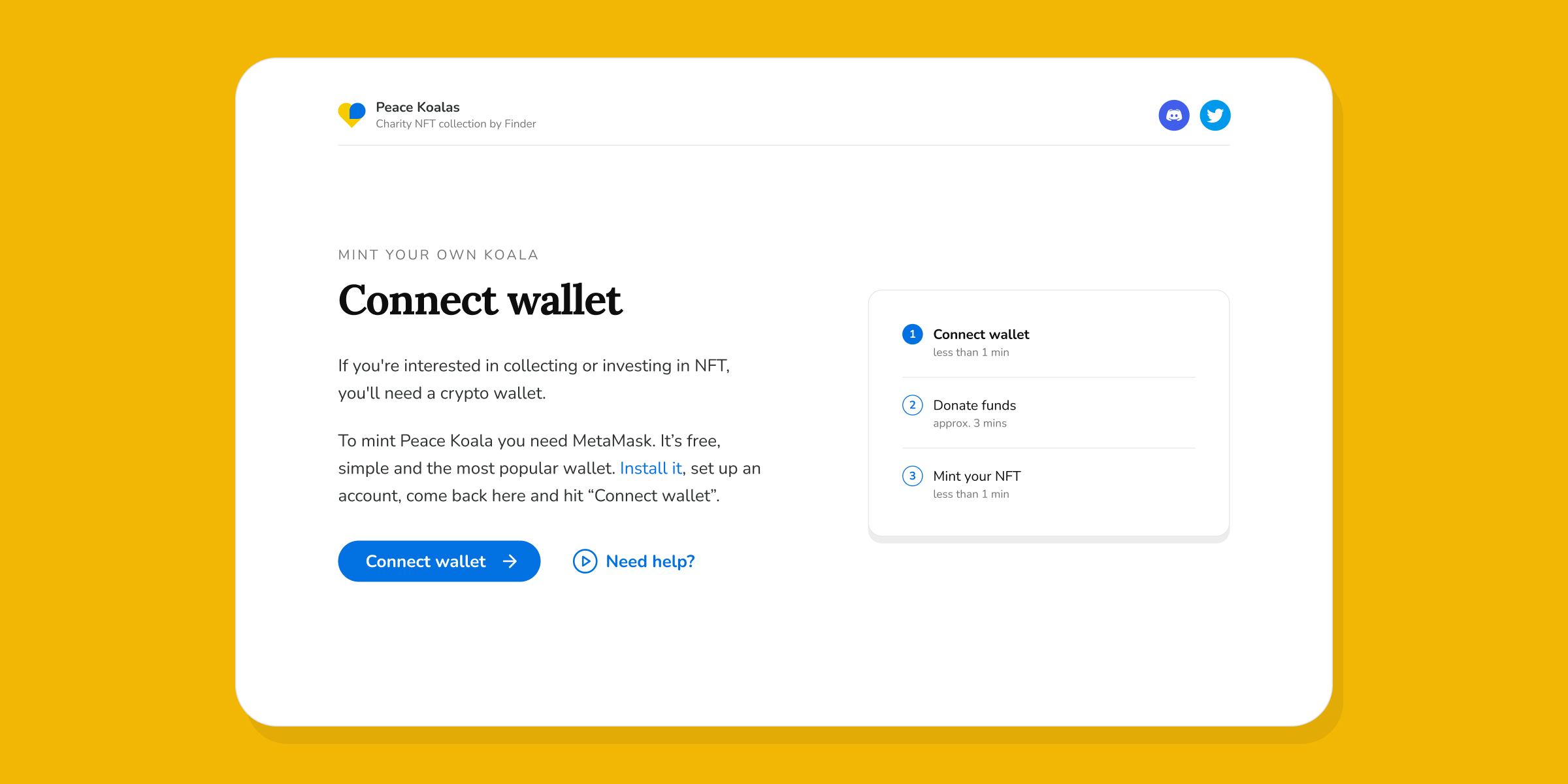
The newbie path
Newbies got the opposite: an experience that explained everything — what a wallet is, why it's needed, what each step does — anticipating a first-timer's doubts while staying simple enough that the guidance never became overwhelming. By the end a newbie wasn't just done — they were equipped to mint other NFTs on their own.
-
A landing page built on trust
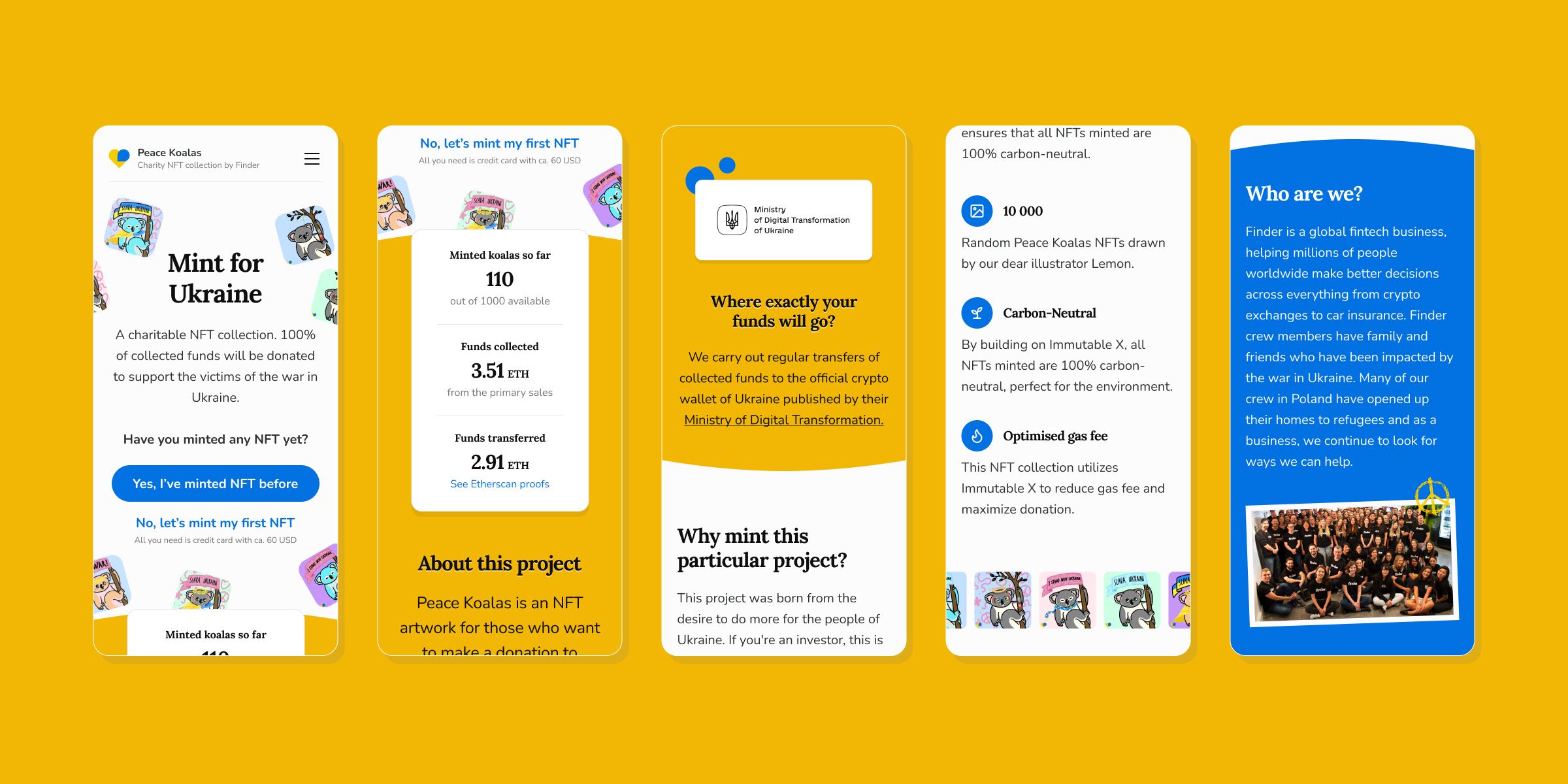
It had one job: earn trust before asking for anything. It led with the organisations the donations would reach and an itemised breakdown of where every dollar went.
What the collection raised
The collection launched on schedule and raised funds for Ukrainian aid organisations.
Results
-
110 NFTs minted
The collection sold partially within the campaign window.
-
$6,000 raised
All proceeds were donated to Ukrainian aid organisations.
-
31% first-time NFT buyers
Nearly a third of minters had never bought an NFT before — validating the decision to offer a non-crypto path, and proving the beginner flow worked.